Monday, November 8, 2021

To clear beds for Covid, needed pancreatic cancer surgery became “elective” by offering patients chemo to tide them over. We were told “elective” surgery was just gravy for greedy doctors-Newsday

 .

About those postponed “elective” surgeries we were told were just gravy for greedy doctors: NY State doctors could re-classify needed pancreatic cancer surgery as “elective” by instead offering patients chemo to tide them over during NY State order barring “elective surgeries statewide to ensure beds were available for COVID-19 patients.”…Closure of many physicians’ offices also prevented timely care…”On Wednesday [Nov. 3], there were 592 inpatients, more than the 583 inpatient room beds, Schwarz said. All but eight were non-COVID-19 cases.”

11/7/21, Long Island hospitals seeing uptick in seriously ill patients, but not for COVID-19," Newsday, David Olson
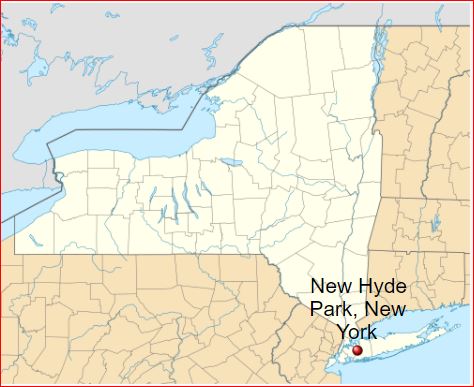
“Some Long Island hospitals are seeing an uptick in seriously ill patients, and patient deaths, a trend doctors said may stem largely from people delaying care for fear of contracting the coronavirus.

Our patients now are sicker than our patients used to be,said Dr. Richard Schwarz, medical director of Long Island Jewish Medical Center in New Hyde Park, which in the past two months has regularly been over capacity. “The people in the ICU [intensive care unit] are staying there longer than before, and some of the outcomes are not as good.”

Hospitals on Long Island are seeing an increase in seriously ill patients and deaths from what they believe is partly a result of people delaying care because of the pandemic.

Studies and surveys have found that many people avoided doctors because they were afraid of contracting the coronavirus, or that

they couldn’t get appointments because of closed offices.

When people put off going to the doctor, conditions can worsen and become irreversible and potentially fatal, doctors say….

Hospitals statewide are seeing a higher-than-usual number of patients in inpatient beds and in emergency rooms, said Bea Grause, president of the Healthcare Association of New York State, which represents nonprofit hospitals and health care organizations.

Although there’s no data to document how much of the increase is due to people who put off care, “It’s reasonable to connect pandemic-related delays to at least some of the current influx,” Grause said in an email.

Dr. Shaline Rao, a cardiologist at NYU Langone Hospital-Long Island in Mineola, said she’s seen a larger share of her patients die since the pandemic began than is typical.

“I thought they had potential to stabilize or even recover, but they didn’t come in and they didn’t follow up as I had hoped,” said Rao, director of advanced cardiac therapeutics for the hospital.Then we find out they passed away.”

Forty-one percent of Americans said they had forgone medical care from March to mid-July 2020, a survey published in January in JAMA Network Open found. Fear of contracting COVID-19 and closed outpatient medical practices were the main reasons, according to the survey. During the spring 2020 COVID-19 peak in New York, health systems across Long Island sent doctors, nurses and other staff from outpatient offices to hospitals to handle the crush of COVID-19 patients there.

[Dr. Richard] Schwarz, [medical director of Long Island Jewish Medical Center in New Hyde Park] said even with many doctors and nurses focused on COVID-19 patients during the early weeks of the pandemic rather than on their regular patients, “Things that were felt to require urgent attention got it. Things that did not seem so urgent were delayed. But any time you’re dealing with any medical condition, delay is not your friend.”…

In addition, doctors did not want to unnecessarily expose to the coronavirus medically vulnerable patients who did not appear to urgently need care, he said.

Hospitals throughout the Northwell Health system — of which Long Island Jewish is a part — are noting that patients in recent weeks appear to be on average sicker than usual, said Dr. David Battinelli, a senior vice president at Northwell Health.

The same is true in emergency rooms across Long Island and the Hudson Valley, some of which also have an unusually high number of patients, said Darwell, whose organization represents 51 Long Island and Hudson Valley hospitals.

At Long Island Jewish, “We’ve consistently gotten more patients than we have room for” in inpatient rooms over the past two months, Schwarz said. Some patients must wait for inpatient beds on stretchers in the emergency department, with staff and portable equipment monitoring them there, he said.

One reason for the higher patient census is that because patients are on average sicker, they’re staying in the hospital longer, he said.

“We think people are coming in with the same diagnoses, but at a more advanced stage,“ he said.

On Wednesday [Nov. 3], there were 592 inpatients, more than the 583 inpatient room beds, Schwarz said. All but eight were non-COVID-19 cases.

All 48 intensive care beds are sometimes full, so “we’ve been using overflow beds, beds that are not typically ICU beds,“ Schwarz said.

“I now have a daily call with all of the medical directors of all of our intensive care units basically trying to juggle beds and see who we can put where,” he said.

Checkups, screenings can make a difference

Dr. Aaron Glatt, chairman of medicine at Mount Sinai South Nassau hospital in Oceanside, said that with certain diseases, a checkup or screening could spell the difference between successful early treatment and serious disease.

“It could go from being much more treatable, to much less treatable, and even sometimes fatal,” he said.

 .........

[Dr. Shaline] Rao, [a cardiologist at NYU Langone Hospital-Long Island in Mineola] said primary care doctors typically are the first to spot a potential cardiac-related problem, and they then refer patients to cardiologists. Skipped doctor appointments mean a potential heart condition could remain undiagnosed and untreated, she said.

If an issue is first diagnosed in a hospital rather than a doctor’s office, That usually means they’ve already gotten to a phase in which the stress of the high blood pressure has resulted in heart or kidney dysfunction or potentially even a stroke,” she said. “It’s much harder to guarantee the type of reversal or improvement that we get when we treat people much earlier, in the office.”

Rao said some cardiac patients still are nervous about in-person appointments, because they realize heart conditions make them more susceptible to severe COVID-19. But, she said, doctors’ offices and hospitals have extensive safety precautions, and “the risk of transmission is much higher just from day-to-day life in the community.”

Concerns about coronavirus transmission within hospitals were higher at the beginning of the pandemic. Pat Rella, a social worker from Little Neck, Queens, said that’s one reason why her doctors at Long Island Jewish waited to schedule her pancreatic-cancer surgery until after the spring 2020 COVID-19 surge. Instead, they put her on chemotherapy while closely monitoring her tumor.

Rella, who is in her 70s, said she “was extremely nervous about” being in a hospital with COVID-19 patients.

“On the other hand, I was concerned that the delay might negatively impact my outcome,” she said.

Rella said doctors believed that, with the pre-surgery chemotherapy option, her operation would be considered elective, and a state directive temporarily barred elective surgeries statewide to ensure beds were available for COVID-19 patients.

The chemotherapy worked as hoped. “By the time he did the surgery, my tumor had shrunk,” Rella said.

The pandemic also impacted psychiatric care, said Dr. Grace Ting, deputy chief medical officer at Nassau University Medical Center in East Meadow. Many patients skipped appointments, so psychiatrists and social workers weren’t seeing issues that could have been addressed through admission to NUMC’s psychiatric floors, which saw the number of new patients plummet during the early months of the pandemic, she said.

Now there often are patients waiting in beds in NUMC’s psychiatric emergency department awaiting one of the 125 psychiatric inpatient beds, Ting said.

Many of the psychiatric inpatient admissions occur after a family member persuades a loved one to seek treatment or reaches out to a psychiatrist, social worker or the police, she said. Throughout much of 2020, when many people isolated themselves, if someone had psychiatric issues, “They were not noticed,” she said.

“People are going out more now, and family are visiting each other now, so other people are noticing: ‘Hey, this [person] is not acting normally.’””


..............


Sunday, November 7, 2021

New Jersey pollster publishes apology to NJ voters for misleading final Governor’s poll giving Democrat Murphy 11 point lead. Murphy had only a 1 point lead over Republican Ciattarelli when election was finally called

 .

Democrat Phil Murphy led by 1 point when the race was called Wednesday evening with 99% of the vote in. Monmouth’s last poll had Murphy up by 11.

Fri., 11/5/21, “I blew it”: New Jersey pollster apologizes after close governor’s race," Axios, via news.yahoo.com

“Patrick Murray, director of the Monmouth University Polling Institute on the Jersey Shore, wrote an op-ed [posted below] for The (Newark) Star-Ledger apologizing for a poll six days before the election that said Gov. Phil Murphy “maintains a sizable lead” over Republican Jack Ciattarelli.

Why it matters: The poll had Murphy up by 11. The race wasn’t called until Wednesday evening. With 99% of the vote in, Murphy is up by 1 point.

What they’re saying: Murray, who has headed polling since 2005, writes that if you’re “a Republican who believes the polls cost Ciattarelli an upset victory or a Democrat who feels we lulled your base into complacency, feel free to vent. I hear you”:

I owe an apology to Jack Ciattarelli’s campaign–and to Phil Murphy’s campaign for that matter–because inaccurate public polling can have an impact on fundraising and voter mobilization efforts. But most of all I owe an apology to the voters of New Jersey for information that was at the very least misleading.”

What we’re watching: “If we cannot be certain that these polling misses are anomalies,” the pollster writes, “then we have a responsibility to consider whether releasing horse race numbers in close proximity to an election is making a positive or negative contribution to the political discourse.””

“Go deeper...By the numbers: N.J. close call"

…………………………………

Added: 11/4 and 11/5/21, Pollster: ‘I blew it.’ Maybe it’s time to get rid of election polls. | Opinion, By Patrick Murray

“Patrick Murray, director of the Monmouth University Polling Institute, says the growing perception that election polling is broken cannot be easily dismissed.”

I blew it. The final Monmouth University Poll margin did not provide an accurate picture of the state of the [NJ] governor’s race. So, if you are a Republican who believes the polls cost Ciattarelli an upset victory or a Democrat who feels we lulled your base into complacency, feel free to vent. I hear you.

I owe an apology to Jack Ciattarelli’s campaign–and to Phil Murphy’s campaign for that matter–because inaccurate public polling can have an impact on fundraising and voter mobilization efforts. But most of all I owe an apology to the voters of New Jersey for information that was at the very least misleading.

I take my responsibility as a public pollster seriously. Some partisan critics think we have some agenda about who wins or loses. I can only assume they have never met a public pollster. The thing that keeps us up at night — our “religion” as it were — is simply getting the numbers right.

Unlike a campaign consultant, my job is not to figure out a candidate’s best path to victory, but to provide an explanation of the public mood as it exists now. Polling continues to do that quite well when we are taking a snapshot of the full population. For example, polls on the impact of COVID and attitudes toward vaccines over the past year and a half provided an accurate picture of shifting behaviors that directly impacted [government mandates about alleged] public health.

Election polling is a different animal, prone to its fair share of misses if you focus only on the margins. For example, Monmouth’s polls four years ago nailed the New Jersey gubernatorial race but significantly underestimated Democratic performance in the Virginia contest. This year, our final polls provided a reasonable assessment of where the Virginia race was headed but missed the spike in Republican turnout in New Jersey.

The difference between public interest polls and election polls is that the latter violates the basic principles of survey sampling. For an election poll, we do not know exactly who will vote until after Election Day, so we have to create models of what we think the electorate could look like. Those models are not perfect. They classify a sizable number of people who do not cast ballots as “likely voters” and others who actually do turn out as being “unlikely.” These models have tended to work, though, because the errors balance out into a reasonable projection of what the overall electorate eventually looks like.

Monmouth’s track record with these models, particularly here in our home state over the past 10 years, has been generally accurate within the range of error inherent in election polling. However, the growing perception that polling is broken cannot be easily dismissed.

Monmouth’s conservative estimate in this year’s New Jersey race was an 8-point win for Murphy, which is still far from the final margin. More than one astute observer of polls has pointed out

that the incumbent was consistently polling at either 50% or 51% against a largely unknown challenger. That metric in itself should have been an indication of

Murphy’s underlying weakness as an incumbent.

Still, in the age of polling aggregators, needles, and election betting markets, we tend to obsess more on the margin than on the candidate’s vote share. And we end up assuming that the “horse race” number is more precise than it actually is. This can lead to misleading narratives about the state of the race, as happened in New Jersey this year.

While pundits and the media are hardwired to obsess on margins, we pollsters bear some responsibility too. Some organizations have decided to opt-out of election polling altogether, including the venerable Gallup Poll and the highly regarded Pew Research Center, because it distracts from the contributions of their public interest polling. Other pollsters went AWOL this year. For instance, Quinnipiac has been a fixture during New Jersey and Virginia campaigns for decades but issued no polls in either state this year.

Perhaps that is a wise move. If we cannot be certain that these polling misses are anomalies then we have a responsibility to consider whether releasing horse race numbers in close proximity to an election is making a positive or negative contribution to the political discourse.

This is especially important now because the American republic is at an inflection point. Public trust in political institutions and our fundamental democratic processes is abysmal. Honest missteps get conflated with “fake news”–a charge that has hit election polls in recent years.

Most public pollsters are committed to making sure our profession counters rather than deepens the pervasive cynicism in our society. We try to hold up a mirror that accurately shows us who we are. If election polling only serves to feed that cynicism, then it may be time to rethink the value of issuing horse race poll numbers as the electorate prepares to vote.”

“Patrick Murray is the director of the Monmouth University Polling Institute.”

…………………………………

Added: Skew of sample, ie, D/R/I, not mentioned in these articles. Margin of error in one poll was 4.1:

11/6/21, Why the pollsters were so wrong about the N.J. governor’s race," nj.com

“Gov. Phil Murphy took the stage inside Asbury Park’s Grand Arcade at about half-past midnight Wednesday morning to give a four-minute speech thanking his dwindling number of supporters in the room for sticking through the night.

It was supposed to be a victory speech, his staff thought confidently hours earlier. Instead, moments after Murphy left the stage, the music that had played on repeat for five hours shut off and the dark hall turned bright at the flick of the switch to massive floodlights, and the dejected crowd went straight toward the exit.

Hours earlier they were jubilant. Why? Public polling showed Murphy was a shoo-in to become the first Democrat since Brendan Byrne in 1977 to win a second term in the Garden State.

Instead, the results throughout Wednesday showed the governor and Republican Jack Ciattarelli separated by less than a percentage point. The Associated Press declared Murphy the winner Wednesday

by a less-than-1-percentage-point margin, nearly 24 hours after the polls closed.

So what happened with all those polls?

“In the past, we’ve been very good at that modeling, but in the (Donald) Trump era that is going out the window,” said Patrick Murray, director Monmouth University Polling, which released a survey last week that showed Murphy beating Ciattarelli by 11 percentage points.

Monmouth, like other polls released during the campaign, has a proven track record.

In 2017, it released a poll within a week of Murphy’s matchup against Republican nominee Kim Guadagno that showed Murphy winning by 14 points. Murphy won by 14 points. 
 
In 2013, it had then-Gov. Chris Christie ahead of his Democratic rival by 20 points. Christie won by 22. And so on.
 
It has an “A” rating from FiveThirtyEight, which keeps tabs on pollsters’ track record. 
 
Asking people their thoughts on things like mask mandates, climate change, and other public policy gives pollsters a clear snapshot in time of how people feel about certain issues. Pollsters like Murray haven’t run into problems with those types of surveys.

But elections? They don’t always hit the mark as of late.

“A significant number of Trump Republicans came out to vote but were not captured in our polling,” Murray said. “Polling, the media. They’re all part of an establishment they distrust and so they won’t bother to speak to us, and it’s large enough now, [allegedly] kind of activated by Donald Trump, that it is throwing off a lot of our polling around elections.” [It's important to mention that "distrust" wasn’t “activated” by Trump, and further that Trump himself embraced the establishment immediately after being elected. The views of voters you cite have been informed by many years of experience not involving Trump, mainly with the Republican Establishment].

And it wasn’t just Monmouth.

A Rutgers-Eagleton survey released Monday had Murphy with an 8-point lead. Fairleigh Dickinson University survey had him up by 9 percentage points, the same margin as a Stockton University survey. An Emerson College/PIX 11 survey released late last month showed it at a 6-point advantage for Murphy and the Republican-leaning Trafalgar Group showed the closest margin–4 percentage points.

Ashley Koning, director of Eagleton Center for Public Interest Polling, stressed the human element of polling people as politics are increasingly more polarizing. [“Polarizing?” If everyone thinks alike, isn’t that communism?]

“There needs to be a better education of what polls are and what polls aren’t,” Koning said. [It’s a little late for that] “No. 1, they aren’t crystal balls. No. 2, they are snapshots in time. No. 3, they’re based on human behavior and perceptions. And people can lie. Maybe there was something going on with Republicans not participating in polls.”

She noted her [Eagleton] poll [predicting Murphy by 8 points]. She noted her poll had a 4.1 percentage point margin of error.

“That really shows there was a wide range that could have happened,” Koning said. “We need to be doing a better job showing that range of possibility and embracing that uncertainty. The media and the public need to be a better job of being a poll consumer and not putting all the eggs in one basket. There will always be error there because we can’t talk to an entire population.”

The election’s numbers, of course, aren’t final. Thousands of votes, including mail-in and provisional ballots, are still being counted in New Jersey as the state adjusts to more people voting in non-traditional ways. And many of the outstanding votes are mail-in, a system Democratic voters are more likely to use. That could boost Murphy’s margin in the end.

Lindsey Cormack, an assistant political science professor at the Stevens Institute of Technology in Hoboken, argues people need to get “to a place where we have to release our hopes as to what polls can tell us.” [Who is “we?”]

She noted landline polling is becoming “extinct” and that cell phone polling is “difficult.”

”This follows that pattern: We think we know what’s going until we don’t,” Cormack said.”

……………………………………..

New Jersey trivia: 3/31/21, “New Jersey easily ranks as one of the most racially and culturally diverse states in the country. In fact, nearly one in four residents were born outside the United States."Patrick Murray, Monmouth.edu


.................


Saturday, November 6, 2021

AP called race for truck driver Edward Durr in NJ State Senate district 3 over Steve Sweeney who’s held the seat for 20 yrs though never received more than 32,000 votes. Mr. Durr won with 32,742

 .

When AP on 11/4 called the race for State Senate in NJ district 3, Edward Durr's 32,742 votes were 2298 more than Sweeney's….In his research Mr. Durr found that State Senator Sweeney in 20 years had never broken 32,000 votes. Sweeney’s current Nov. 2021 tally stands at 30,444.

NJ legislative district map: District 3 is in southwest, light blue in map

11/5/21, Powerful New Jersey Senate Democrat says ‘12,000 ballots recently found’ support refusal to concede to truck driver," Washington Examiner, Daniel Chaitin

“The race between Sweeney and Edward Durr was called late Thursday [11/4] morning by the Associated Press. There were roughly 2,000 votes [2298] between them and 100% of precincts reporting. Durr led by 32,742 votes, or 51.8%, while Sweeney trailed with 30,444, or 48.2%….

Sweeney has held the seat for 20 years and has served as the state Senate’s president since 2010. New Jersey’s 3rd state Senate District, which he represents, covers parts of Gloucester, Cumberland, and Salem counties. The district has been solidly blue in both the state Senate and General Assembly since Sweeney took office in 2003.”…

Sweeney has never broken 32,000 votes:

11/4/21, ““Well, I’m a numbers guy and I’ve looked at the numbers over the years,” Durr said in an August interview with conservative commentator Elizabeth Nader. “We have a district that is 150,000 voters. Senator Sweeney has never broken 32,000 votes ... and so I felt if he can’t even get half the district, that means there’s numbers out there to be taken, and you just have to get people to come out and vote. I believe if they come out and vote, we could win,” Durr said.

Durr promises lower property taxes and the creation of a “friendly business environment.” He describes himself as a 2nd Amendment rights advocate and fiscally conservative. He has previously run unsuccessfully for state Assembly in 2017 and 2019, but this is his first elected position.”…11/4/21, “After Spending Just $153 on Campaign, Truck Driver Beats NJ Senate President: AP, nbcnewyork.com


................


Thursday, November 4, 2021

MSNBC claims Critical Race Theory “isn’t real,” perhaps views suburban voters as racist hicks. Is a NY City father removing his daughter from a $54,000 a year race-obsessed private school also a racist hick?

 .

NY City father, April 13, 2021: Brearley’s obsession with race must stop...I cannot tolerate a school that not only judges my daughter by the color of her skin, but encourages and instructs her to prejudge others by theirs5/25/21, I’ve received thousands of emails from parents, and teachers, and grandparents, and concerned citizens from all over the country. I had no idea how entrenched and widespread this issue of critical race theory was across the country, all over. I knew it was in New York City schools, I knew it was in some California schools, but I had no idea how quickly this had spread to schools-public, private, even religious schools, all over. This is an enormous problem, and I think we have to fight this much harder.”…

………………………………

11/2/21, But MSNBC says Critical Race Theory “isn’t real:” “MSNBC’s Nicolle Wallace: “Critical Race Theory, which isn’t real, turned the suburbs 15 points” to Republican Youngkin:

……………………………………….

Added:  Full text of Mr. Gutmann’s April 13, 2021, letter to Brearley parents. Four sentence introduction about Brearley, by Bari Weiss: “If you don’t know about Brearley, it’s a private all-girls school on the Upper East Side of Manhattan. It costs $54,000 a year and prospective families apparently have to take an “anti-racism pledge” to be considered for admission….Gutmann chose to pull his daughter, who has been in the school [for 7 years] since kindergarten, and sent this missive to all 600 or so families in the school earlier this week.”…

Following is Mr. Gutmann’s 4/13/2021 letter to fellow Brearley parents:

“April 13, 2021

Dear Fellow Brearley Parents, 

Our family recently made the decision not to reenroll our daughter at Brearley for the 2021-22 school year. She has been at Brearley for seven years, beginning in kindergarten. In short, we no longer believe that Brearley’s administration and Board of Trustees have any of our children’s best interests at heart. Moreover, we no longer have confidence that our daughter will receive the quality of education necessary to further her development into a critically thinking, responsible, enlightened, and civic minded adult. I write to you, as a fellow parent, to share our reasons for leaving the Brearley community but also to urge you to act before the damage to the school, to its community, and to your own child’s education is irreparable.

It cannot be stated strongly enough that Brearley’s obsession with race must stop. It should be abundantly clear to any thinking parent that Brearley has completely lost its way. The administration and the Board of Trustees have displayed a cowardly and appalling lack of leadership by appeasing an anti-intellectual, illiberal mob, and then allowing the school to be captured by that same mob. What follows are my own personal views on Brearley’s antiracism initiatives, but these are just a handful of the criticisms that I know other parents have expressed.

I object to the view that I should be judged by the color of my skin. I cannot tolerate a school that not only judges my daughter by the color of her skin, but encourages and instructs her to prejudge others by theirs. By viewing every element of education, every aspect of history, and every facet of society through the lens of skin color and race, we are desecrating the legacy of Dr. Martin Luther King Jr., and utterly violating the movement for which such civil rights leaders believed, fought, and died. 

I object to the charge of systemic racism in this country, and at our school. Systemic racism, properly understood, is segregated schools and separate lunch counters. It is the interning of Japanese and the exterminating of Jews. Systemic racism is unequivocally not a small number of isolated incidences over a period of decades. Ask any girl, of any race, if they have ever experienced insults from friends, have ever felt slighted by teachers or have ever suffered the occasional injustice from a school at which they have spent up to 13 years of their life, and you are bound to hear grievances, some petty, some not. We have not had systemic racism against Blacks in this country since the civil rights reforms of the 1960s, a period of more than 50 years. To state otherwise is a flat-out misrepresentation of our country’s history and adds no understanding to any of today’s societal issues. If anything, longstanding and widespread policies such as affirmative action, point in precisely the opposite direction.

I object to a definition of systemic racism, apparently supported by Brearley, that any educational, professional, or societal outcome where Blacks are underrepresented is prima facie evidence of the aforementioned systemic racism, or of white supremacy and oppression. Facile and unsupported beliefs such as these are the polar opposite to the intellectual and scientific truth for which Brearley claims to stand. Furthermore, I call bullshit on Brearley’s oft-stated assertion that the school welcomes and encourages the truly difficult and uncomfortable conversations regarding race and the roots of racial discrepancies.

I object to the idea that Blacks are unable to succeed in this country without aid from government or from whites. Brearley, by adopting critical race theory, is advocating the abhorrent viewpoint that Blacks should forever be regarded as helpless victims, and are incapable of success regardless of their skills, talents, or hard work. What Brearley is teaching our children is precisely the true and correct definition of racism. 

I object to mandatory anti-racism training for parents, especially when presented by the rent-seeking charlatans of Pollyanna. These sessions, in both their content and delivery, are so sophomoric and simplistic, so unsophisticated and inane, that I would be embarrassed if they were taught to Brearley kindergarteners. They are an insult to parents and unbecoming of any educational institution, let alone one of Brearley’s caliber. 

I object to Brearley’s vacuous, inappropriate, and fanatical use of words such as “equity,” “diversity” and “inclusiveness.” If Brearley’s administration was truly concerned about so-called “equity,” it would be discussing the cessation of admissions preferences for legacies, siblings, and those families with especially deep pockets. If the administration was genuinely serious about “diversity,” it would not insist on the indoctrination of its students, and their families, to a single mindset, most reminiscent of the Chinese Cultural Revolution. Instead, the school would foster an environment of intellectual openness and freedom of thought. And if Brearley really cared about “inclusiveness,” the school would return to the concepts encapsulated in the motto “One Brearley, ”instead of teaching the extraordinarily divisive idea that there are only, and always, two groups in this country: victims and oppressors. 

l object to Brearley’s advocacy for groups and movements such as Black Lives Matter, a Marxist, anti family, heterophobic, anti-Asian and anti-Semitic organization that neither speaks for the majority of the Black community in this country, nor in any way, shape or form, represents their best interests. 

I object to, as we have been told time and time again over the past year, that the school’s first priority is the safety of our children. For goodness sake, Brearley is a school, not a hospital! The number one priority of a school has always been, and always will be, education. Brearley’s misguided priorities exemplify both the safety culture and “cover-your-ass” culture that together have proved so toxic to our society and have so damaged the mental health and resiliency of two generations of children, and counting.

I object to the gutting of the history, civics, and classical literature curriculums. I object to the censorship of books that have been taught for generations because they contain dated language potentially offensive to the thin-skinned and hypersensitive (something that has already happened in my daughter’s 4th grade class). I object to the lowering of standards for the admission of students and for the hiring of teachers. I object to the erosion of rigor in classwork and the escalation of grade inflation. Any parent with eyes open can foresee these inevitabilities should antiracism initiatives be allowed to persist.

We have today in our country, from both political parties, and at all levels of government, the most unwise and unvirtuous leaders in our nation’s history. Schools like Brearley are supposed to be the training grounds for those leaders. Our nation will not survive a generation of leadership even more poorly educated than we have now, nor will we survive a generation of students taught to hate its own country and despise its history. 

Lastly, I object, with as strong a sentiment as possible, that Brearley has begun to teach what to think, instead of how to think. I object that the school is now fostering an environment where our daughters, and our daughters’ teachers, are afraid to speak their minds in class for fear of “consequences.” I object that Brearley is trying to usurp the role of parents in teaching morality, and bullying parents to adopt that false morality at home. I object that Brearley is fostering a divisive community where families of different races, which until recently were part of the same community, are now segregated into two. These are the reasons why we can no longer send our daughter to Brearley.

Over the past several months, I have personally spoken to many Brearley parents as well as parents of children at peer institutions. It is abundantly clear that the majority of parents believe that Brearley’s antiracism policies are misguided, divisive, counterproductive and cancerous. Many believe, as I do, that these policies will ultimately destroy what was until recently, a wonderful educational institution. But as I am sure will come as no surprise to you, given the insidious cancel culture that has of late permeated our society, most parents are too fearful to speak up. 

But speak up you must. There is strength in numbers and I assure you, the numbers are there. Contact the administration and the Board of Trustees and demand an end to the destructive and anti-intellectual claptrap known as antiracism. And if changes are not forthcoming then demand new leadership. For the sake of our community, our city, our country and most of all, our children, silence is no longer an option. 

Respectfully,

Andrew Gutmann”

………………………………

Added:

May 25, 2021, “[NY City] Parent [Andrew Gutmann] tells Tucker he was ‘excommunicated’ from school after viral letter," You tube, Fox News

Andrew Gutmann tells ‘Tucker Carlson Tonight’ since pushing back on critical race theory [taught at NY City’s Brearley School] he has received [thousands of] notes from parents and teachers.” 

At 2:05: Mr. Gutmann: Thousands of emails from parents, and teachers, and grandparents, and concerned citizens from all over the country. Overwhelmingly supportive which is great, but the flip side of that is I had no idea how entrenched and widespread this issue of critical race theory was across the country, all over. I knew it was in New York City schools, I knew it was in some California schools, but I had no idea how quickly this had spread to schools-public, private, even religious schools, all over. This is an enormous problem, and I think we have to fight this much harder.”…

……………………………………………..

Added: It’s racism again. Nov. 2021 Virginia election outcome proved voters are racist:

11/3/21, Julia Ioffe @juliaioffe· If you have any questions about what the Virginia governor’s race was *really* about... washingtonpost.com/elections/inte


.......................

Monday, November 1, 2021

Question for Greta: Why is US military allowed to emit more CO2 than many industrialized nations?-Forbes, 6/13/2019

 .

“In FY2017, the Department of Defense spent $3.5 billion heating, cooling, and providing electricity to 560,000 buildings at 500 installations.”

6/13/2019, Report: The U.S. Military Emits More CO2 Than Many Industrialized Nations [Infographic],” Forbes, N. McCarthy, Chart by Statista

6/13/2019: “During a press conference with Polish President Andrzej Duda, President Trump announced that the U.S. is going to deploy 1,000 more troops to Poland. Even though the soldiers and hardware will be taken from the 52,000-strong U.S. contingent in neighboring Germany, U.S. military deployments and operations require a great deal of energy and leave a major carbon footprint. A new report from Brown University has estimated that since the invasion of Afghanistan in 2001, the U.S. military has emitted 1,212 million metric tons of greenhouse gases. In 2017 alone, CO2 emissions added up to 59 million tons – more than many industrialized nations including Sweden and Switzerland.BP’s Statistical Review of World Energy records carbon dioxide emissions in different countries and in 2017, total estimated CO2 emissions in Sweden came to 48 million tons by comparison. The U.S. military also produced more greenhouse gases than Morocco, Peru, Hungary, Finland, New Zealand and Norway. According to the research from Brown University, the Pentagon would be the world’s 55th largest CO2 emitter if it was a country.

War and preparation for it are fossil fuel intensive activities and along with being the single largest consumer of energy in the U.S., the Department of Defense is the world’s single largest institutional consumer of petroleum. 70% of all energy gets consumed by moving and utilizing troops and equipment around the world, involving the burning of vast quantities of jet fuel and diesel. Military equipment is not known for its fuel efficiency and it is estimated that the country’s remaining fleet of 60,000 humvees only gets four to eight miles per gallon of diesel.

Military real estate also leaves a considerable carbon footprint and in FY2017, the Department of Defense spent

$3.5 billion heating, cooling and providing electricity to

560,000 buildings

at 500 installations.”


.........